
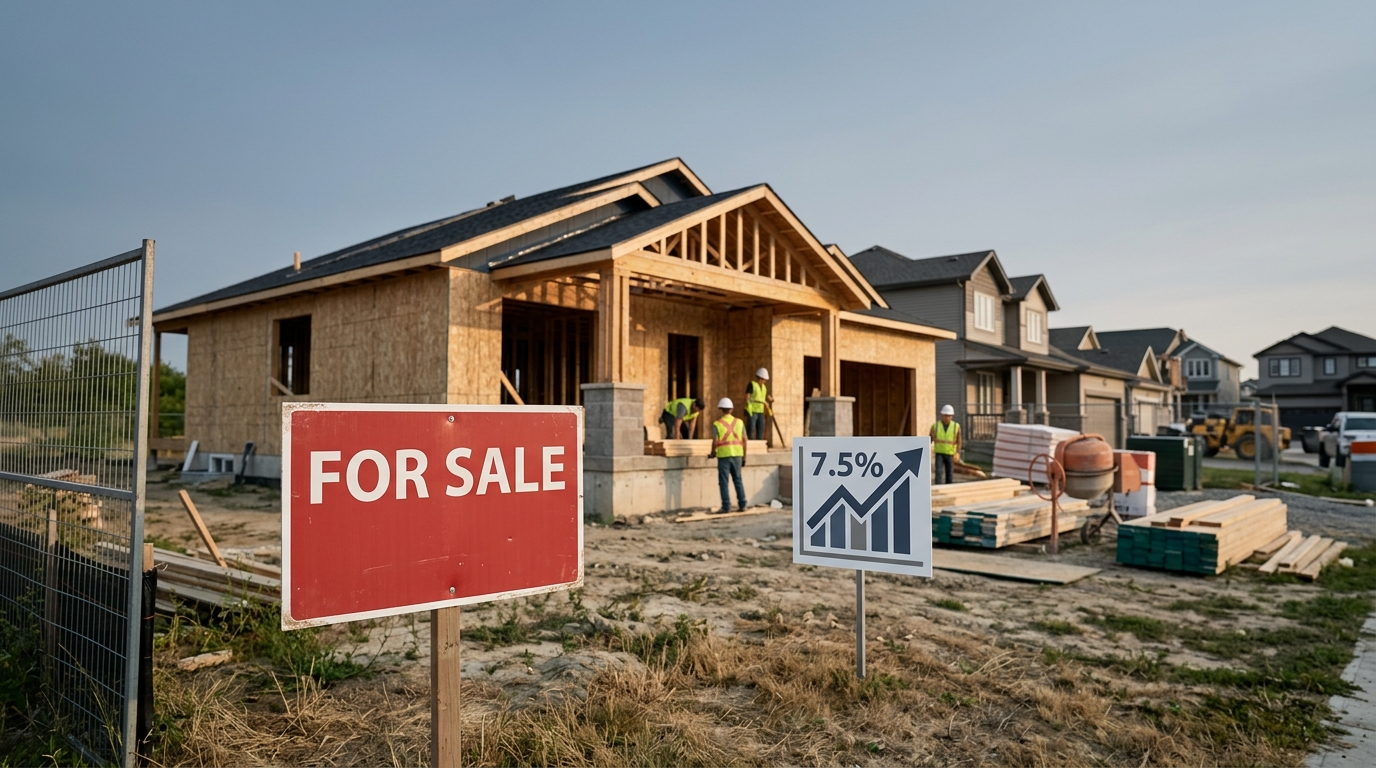
The housing market has two painful data releases ahead, and the backdrop just got materially worse. In its October 2026 Housing Forecast, Fannie Mae’s Economic and Strategic Research Group projected the average 30-year fixed mortgage rate at 7.4% in Q4 2026 and 7.5% across all four quarters of 2027. That is a substantial upward revision from September, when Fannie Mae expected 6.8% in Q4 2026 and 6.7% through 2027, a gap of 0.8 percentage points on the 2027 call.
The catalyst was September CPI. Mortgage rates reached 7.40% in Freddie Mac’s survey for the week ending October 15, 2026, keeping it at its highest level in nearly three years. One year ago, the same rate averaged 6.27%.
Market Snapshot
Fannie Mae has responded to the rate environment by cutting its 2027 refinancing forecast to $430 billion, down significantly from earlier projections of $802 billion. Mortgage applications declined 2.7% in the latest week. That combination, fewer applications, fewer refis, fewer buyers, runs directly into what builders must report this week.
Stocks in Focus: DHI, LEN, PHM, XHB
On October 15, Lennar (LEN) gained over 5% while D.R. Horton (DHI), PulteGroup (PHM), and Toll Brothers (TOL) also advanced, as Treasury yields pulled back sharply. Lennar remains down roughly 25% for the year, however, and the single session has not erased October’s losses.
The iShares U.S. Home Construction ETF (ITB) is down about 13% year to date. DHI reports fiscal fourth-quarter earnings on October 29, making this week’s housing data a direct read on demand conditions heading into that release. September builder confidence fell to 32, the lowest reading since September 2025, and the same survey found that 66% of builders used sales incentives while 38% cut prices.
Catalyst Calendar
- Monday, October 19, 10:00 AM ET: NAHB Housing Market Index, with consensus at 31 versus a prior reading of 32. Any further drop below 32 would signal accelerating deterioration in builder confidence after the rate shock.
- Tuesday, October 20, 8:30 AM ET: September housing starts and building permits from the Census Bureau and HUD, the first detailed picture of construction activity in September and a signal of near-term residential supply trends. Wells Fargo forecasts starts fell 2.0% to 1,250K.
Technical Radar
Housing starts have declined in four of the past five months alongside the steady rise in mortgage rates. The XHB homebuilder ETF faces resistance at levels that preceded the September-October rate surge. A NAHB reading below 30 would be the weakest since early 2025 and could send DHI and LEN toward their year-to-date lows. On the upside, any meaningful pullback in the 10-year yield below 4.7% remains the primary relief valve for the sector.
Risk Radar
The MBA projects the 10-year Treasury yield will average 5.1% in Q4 2026 and remain near 5% throughout 2027, supporting expectations that borrowing costs will not see immediate relief. That yield path makes Fannie Mae’s 7.5% mortgage forecast credible rather than extreme. Builders can offset some of the demand destruction through rate buydowns and incentives, but that mix can support volume while weakening the economics of each sale.
The Cheat Sheet
- Top Market Theme: Mortgage rates near a three-year high, with Fannie Mae projecting no relief in 2027, put housing data this week at the center of the rate-sensitive trade.
- Stock to Watch: DHI, it reports earnings October 29, and Monday’s NAHB read plus Tuesday’s starts data arrive as the last major macro inputs before that release.
- Sector to Watch: Homebuilders (XHB, ITB), the bounce on October 15 was yield-driven, not fundamental. The next 48 hours determine whether it holds.
- Biggest Risk: A NAHB reading at or below 30, combined with starts below 1.25 million, would confirm that Fannie Mae’s pessimism is already showing up in construction activity.
- One Thing to Remember: The rate forecast shifted 80 basis points in a single month. Until the 10-year yield moves durably lower, builder incentives are the only tool keeping demand from falling further, and that comes at a direct cost to margins.