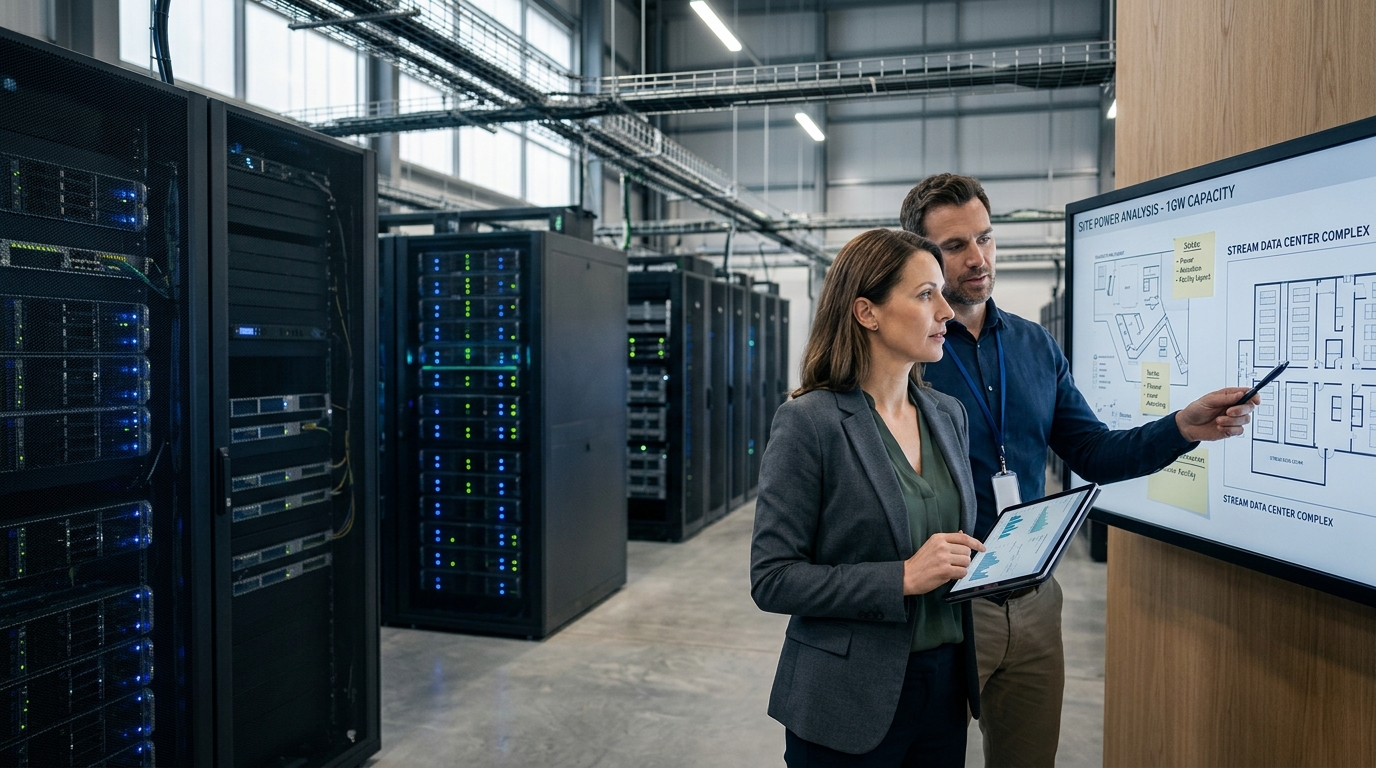
Anthropic has spent most of 2026 signing compute deals at a pace that is difficult to comprehend from the outside. A $45 billion, six-year arrangement with Nscale for 460 megawatts in West Virginia. An $11.6 billion, seven-year contract with Akamai for CPU workloads. And now, reported by The Information on September 22, early talks to lease up to 1 gigawatt of capacity directly from Stream Data Centers, majority-owned by Apollo Global Management, with Google-designed TPUs (and potential Broadcom involvement) filling the halls.
The framing around the Stream talks is that Anthropic wants out from under Amazon and Google as landlords. Anthropic is in early talks to lease up to 1 gigawatt in compute capacity from a data center developer majority-owned by Apollo Global Management, part of a major effort to reduce its reliance on cloud providers. That is the stated logic. The capital-allocation logic underneath it is harder to assess.
What the Cloud Was Actually Costing Them
The cloud relationship with Amazon is not merely financial. Amazon remains Anthropic’s most deeply embedded partner. AWS is considered Anthropic’s chief cloud provider, making its influence structural and not just financial. As of April 2026, Amazon said over 100,000 organizations were running Claude on Amazon Bedrock. When a hyperscaler is both your compute supplier and your primary distribution channel, leaving is not a clean exit. It is a renegotiation of your entire cost and revenue structure simultaneously.
Renting through AWS and Google also means paying for their margin on top of the underlying silicon and power costs. A direct lease with Apollo’s Stream eliminates that layer. By potentially leasing 1 gigawatt of capacity, Anthropic aims to reduce costs associated with cloud computing. The arithmetic on that is real, particularly at the scale Anthropic now operates. In April 2026, The Information reported that Anthropic said its annualized revenue had topped $30 billion, up from $9 billion at the end of 2025. At that size, even a few percentage points of margin difference on infrastructure compounds aggressively.
Variable Cost to Fixed Cost Is Not Automatically Progress
Here is where the thesis gets tested. A cloud arrangement can usually be resized as needs change. A long lease is a fixed obligation that must be paid whether or not the capacity is used, converting a variable cost into a fixed one. That trade is advantageous when future demand is certain and punishing when it is not.
Anthropic’s demand is not certain. Press reporting has said the company confidentially filed for an IPO in June 2026 and has been meeting with potential investors, who expect it to go public as soon as October, with valuations around $2 trillion discussed. An IPO at that level prices in extraordinary growth. If that growth arrives, locking in gigawatts of cheap, directly controlled capacity now looks like exactly the right move. If it stalls, the fixed lease obligations become a very different story.
The reported Google credit guarantee complicates matters further. The Information reported that Google may provide a credit guarantee, but the scope of that support remains unclear. If accurate, Google is not being cut out of this deal. It is being repositioned inside it, as a financial backer rather than a landlord. If Google guarantees Anthropic’s obligations, some of the default risk shifts from a fast-growing AI lab to a company with a much stronger balance sheet, typically letting lenders demand a smaller risk premium and lowering financing costs. That helps Apollo and Stream. It also means Anthropic’s supposed independence from Google is more structural than real.
Apollo Wins Either Way
Developers told The Information that a one-gigawatt compute footprint would need at least $40 billion of capital investment, whichever chip mix wins out. Apollo, through Stream, is being asked to deploy that capital against a tenant that is pre-IPO, likely burning cash, and has yet to prove its economics at full scale. The credit guarantee question exists precisely because of that risk.
For investors in Apollo (APO), the Stream-Anthropic relationship is worth watching closely. A guaranteed long-term lease at gigawatt scale is the kind of contracted cash flow Apollo’s infrastructure funds are built to own. This same week, TechCrunch reported that Anthropic is asking shareholders to approve a special class of shares that would give CEO Dario Amodei and his six co-founders a combined 50.1 percent of the vote on most corporate matters. The governance structure tells you the founders plan to control capital allocation decisions for years. Whether those decisions are wise is the question a long-term investor should be asking. Owning your cost base is a sound instinct. Doing it by swapping one landlord for another, while locking in decade-scale fixed obligations ahead of an IPO, is a bet on certainty that the underlying business has not yet earned.