There are two Teslas. Most people are watching the wrong one.
The automotive division gets all the headlines. Robotaxi milestones, FSD regulatory probes, Cybercab production timelines, Elon Musk’s bandwidth. That’s where the debate lives. And that debate is genuinely hard to resolve, because the outcome distribution for Tesla’s car and autonomy business is about as wide as any major equity in the world.
But tucked inside that conversation is a business that doesn’t fit the Tesla-as-car-company frame or the Tesla-as-AI-company frame. It’s a third thing entirely, and it’s already generating real numbers.
The Energy Segment Nobody Is Pricing
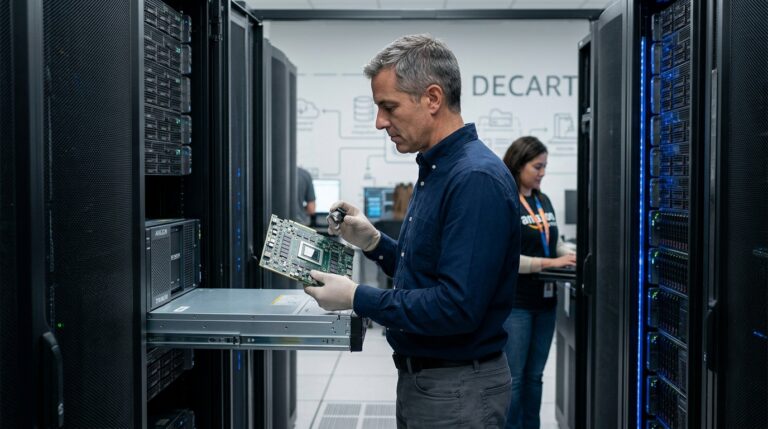
Tesla Energy, the segment covering Megapack utility-scale storage, Powerwall residential units, and solar products, deployed 46.7 GWh of storage in full-year 2025, up 49% year over year. Revenue for the segment reached $12.7 billion, up 27%. Gross margins came in around 30%, making it Tesla’s most profitable business on a margin basis. Not the car. Not FSD. The battery business.
And that’s just 2025. In Q1 2026, Megapack deployments hit a new quarterly record. The segment now contributes a high-teens share of total gross profit. A new Houston Megafactory with 50 GWh of annual capacity is scheduled to start operations by year-end 2026. The Shanghai Megafactory is already ramping. There’s $4.96 billion in deferred revenue from projects already under contract.
At current trajectory, some estimates put energy storage at a $25 billion-plus revenue run rate by 2028.
Here’s the part that matters for investors. That business is growing off a meaningful base, has visible backlog, carries 30% gross margins, and is structurally tied to the global energy transition, AI data center buildout, and grid modernization. None of that requires robotaxis to work. None of that requires NHTSA to approve unsupervised FSD nationwide. It just requires the grid to keep needing storage, which it does at an accelerating pace.
The Valuation Framework Problem
Tesla trades at roughly $360 to $430 depending on the week. JPMorgan estimates 2026 EPS near $1.80. Even at a $2.00 consensus EPS figure with a traditional auto-sector multiple of 15x, the car business alone is worth maybe $27 to $30 per share. That means well over 90% of Tesla’s current market cap is being assigned to non-automotive businesses. Robotaxi, Optimus, FSD licensing, and energy storage are collectively carrying the entire premium.
The problem is the market isn’t separating them. Energy storage, which is actually profitable and growing at a documented 49% rate with locked contracts, is being lumped into the same speculative bucket as Optimus robots that generate no revenue and a robotaxi fleet of 42 registered vehicles in Texas. That’s a valuation error, and it cuts both ways. It means the bear case on Tesla somewhat overshoots because it throws out a real business with the speculative ones. And the bull case somewhat undershoots because it doesn’t isolate the compounding effect of a 30% margin business growing at nearly 50% annually.
The Global Tailwind Is Just Getting Started
Real assets and power capacity have become the dominant allocation theme in capital markets in 2026. AI infrastructure demand is creating physical bottlenecks in electricity supply. Data centers attracted more than one-fifth of global greenfield project investment values in 2025, with announced investment exceeding $270 billion. That spending needs storage. Lots of it.
The energy transition capital is concentrating precisely where supply constraints are most acute. Tesla’s Megapack is the dominant product in utility-scale battery storage. Competitors exist, but no one has matched the manufacturing scale or cost curve that Tesla has built at Lathrop and is now replicating in Shanghai and Houston.
Slight tangent, but it matters here: the global oil shock from the Iran conflict, which pushed WTI above $140 at its peak earlier this year before partially retreating, didn’t hurt Tesla Energy. It helped it. Every energy price spike makes grid-scale storage a more urgent investment for utilities, municipalities, and large industrial buyers. The macro environment that’s been disruptive for Tesla’s car margins is structurally supportive for its battery business.
Options Market Read
Tesla’s IV environment has been elevated all year as the binary robotaxi thesis plays out in real time. IV percentile on TSLA has run above 60% for much of Q2 2026. With Q2 delivery data due in early July and potential Robotaxi expansion announcements on the horizon, the event premium is rich in near-dated options.
For traders who believe the energy storage thesis is being underpaid while the robotaxi thesis is getting all the volatility premium, a defined-risk structure focused on the longer-dated options chain may allow positioning on the energy segment’s compounding without paying the full event-driven IV spike in the front month. Longer-dated options, 90 to 120 days out, reflect lower IV than the front month and carry more of the structural thesis than the news cycle.
- Bull case: Megapack deployments in Q2 2026 exceed estimates, Houston Megafactory ramp is confirmed ahead of schedule, and the energy segment’s contribution to gross profit is explicitly broken out in the Q2 earnings call. That would force analysts to model it separately, and the sum-of-parts math shifts.
- Bear case: Robotaxi incidents accumulate, NHTSA escalates one of its three open FSD investigations to a recall, and the resulting negative headlines drag the whole stock lower, including the energy segment, regardless of its own fundamentals. That’s the risk of holding a good business inside a binary-outcome stock.
- Neutral case: The market continues to trade Tesla as a single entity, energy segment contribution grows quietly, and the valuation debate stays focused on autonomy timelines. The energy business compounds in the background while nobody pays specific attention to it.
What Investors Are Missing
At current margins and growth rates, if Tesla Energy were a standalone company, it would arguably trade at a tech-adjacent multiple given its secular tailwinds, recurring revenue characteristics from Powerwall installations, and backlog visibility. At 30% gross margins and $12.7 billion in 2025 revenue growing at 27% to 49% annually, the comps are not auto companies. They’re closer to industrial software businesses with hardware attached.
The Q2 2026 energy deployment figure, due in early July alongside the delivery report, is probably the most underrated data point in the Tesla story this quarter. If it sets another record, it won’t get the headlines that a robotaxi incident would. But it quietly makes the bull case structurally stronger regardless of what happens with FSD.
The most interesting question isn’t whether Tesla’s robotaxi business will work. It’s whether the energy business is already good enough to matter, independent of the answer.