
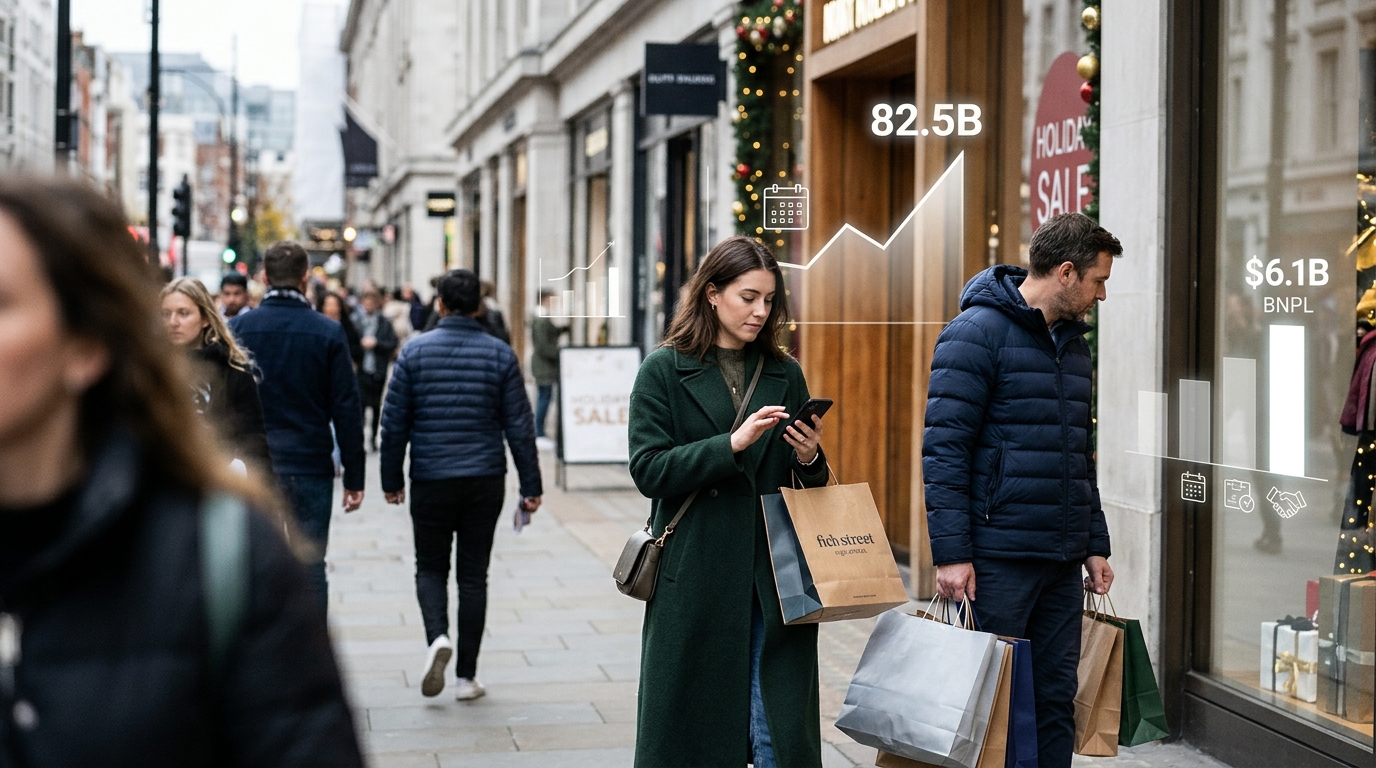
U.S. shoppers spent more than $82.5 billion online between November 1 and November 22, according to Adobe Analytics, while AI-referred retail traffic more than doubled and buy-now-pay-later spending hit $6.1 billion. Black Friday opens tomorrow, and U.S. markets run a half session. The numbers Adobe published this week tell two stories at once: a consumer that is spending with real conviction, and a consumer that is increasingly borrowing to do it.
Those 22 days included two individual days where online shoppers spent at least $4 billion, the first time that has occurred in the weeks ahead of Thanksgiving and Black Friday. Adobe’s forecast calls for Black Friday online sales to increase 9.2% year over year to $12.9 billion and Thanksgiving ecommerce sales to grow 8.5% to $6.9 billion. The full season is projected at a record $275.1 billion. The headline figures are genuinely strong.
What BNPL’s Rise Actually Means for Margins
Strip out the top-line enthusiasm, and the BNPL data deserves a closer read. Buy-now-pay-later is expected to account for $21.3 billion across the holiday season, growing 6.6% year over year. More volume at a slower growth rate means the base is maturing, not collapsing, but the mix shift matters enormously for retail investors.
When a shopper splits a purchase into four installments through Affirm, Klarna, or Afterpay, the retailer typically receives the full payment upfront from the BNPL provider, minus a merchant discount fee that commonly falls in the low single digits and can run higher depending on the platform and product. A Sezzle survey found that 54% of its app users lean on BNPL to absorb higher prices. That framing matters: these are not impulsive buyers adding luxury items to a cart. They are deliberate shoppers stretching budgets in a high-cost environment. The U.S. BNPL market, spanning major providers including Afterpay, Klarna, Affirm, and PayPal, reached about $156.7 billion in originations in 2025, reflecting how quickly the product has moved from a discretionary checkout option toward something closer to a mainstream payment habit.
Which Retailers Hold the Better Position
Not every retailer absorbs BNPL fees the same way, and that is where the investment distinction lies. Amazon and Walmart carry the operational scale to negotiate tighter merchant rates and pass some of the volume cost into their fulfillment economics. Walmart placed sixth among major retailers in average Black Friday discount depth at 30.57%, and Amazon finished ninth at 29.25%, suggesting both are protecting margin rather than chasing volume with steep markdowns. That discipline, combined with their logistics leverage, puts them in a structurally better position when BNPL fees bite into gross profit.
Target is running a more aggressive posture. Target staged a major climb in this year’s discount rankings, rising to third place with an average markdown of 38.47%, which is the highest among mass-market discounters in that ranking set. Deeper discounts combined with BNPL merchant fees compress margins from both ends simultaneously. Target’s recovery has been real, but investors should watch Q4 gross margin guidance carefully when the company reports in January.
The AI Wildcard for Long-Term Portfolio Thinking
The fastest-growing number in Adobe’s data is traffic from AI tools. Visits to U.S. retail sites starting from a link inside an AI chat or AI browser are up 127% year over year so far this season. Adobe projects AI-associated traffic will be up 159% on Thanksgiving, 95% on Black Friday, and 88% on Cyber Monday. That is not a rounding error. AI is becoming a meaningful customer acquisition channel, and the retailer that converts AI-referred visitors most efficiently earns those customers at close to zero incremental cost. Amazon’s product data depth and Prime conversion flywheel give it an early structural edge here.
Wealth Takeaway
Record spending and rising BNPL use are not contradictory signals. They describe the same consumer: willing to spend, but doing so on credit at an accelerating rate. For investors, the distinction is not which retailer sells the most this weekend. It is which one collects the most of that revenue as actual profit. Retailers offering the deepest discounts while also absorbing BNPL fees are running a thinner line than their revenue growth implies. Amazon and Walmart’s margin discipline, combined with their AI traffic advantages, positions them as the more durable beneficiaries of a record-setting but increasingly leveraged holiday season.