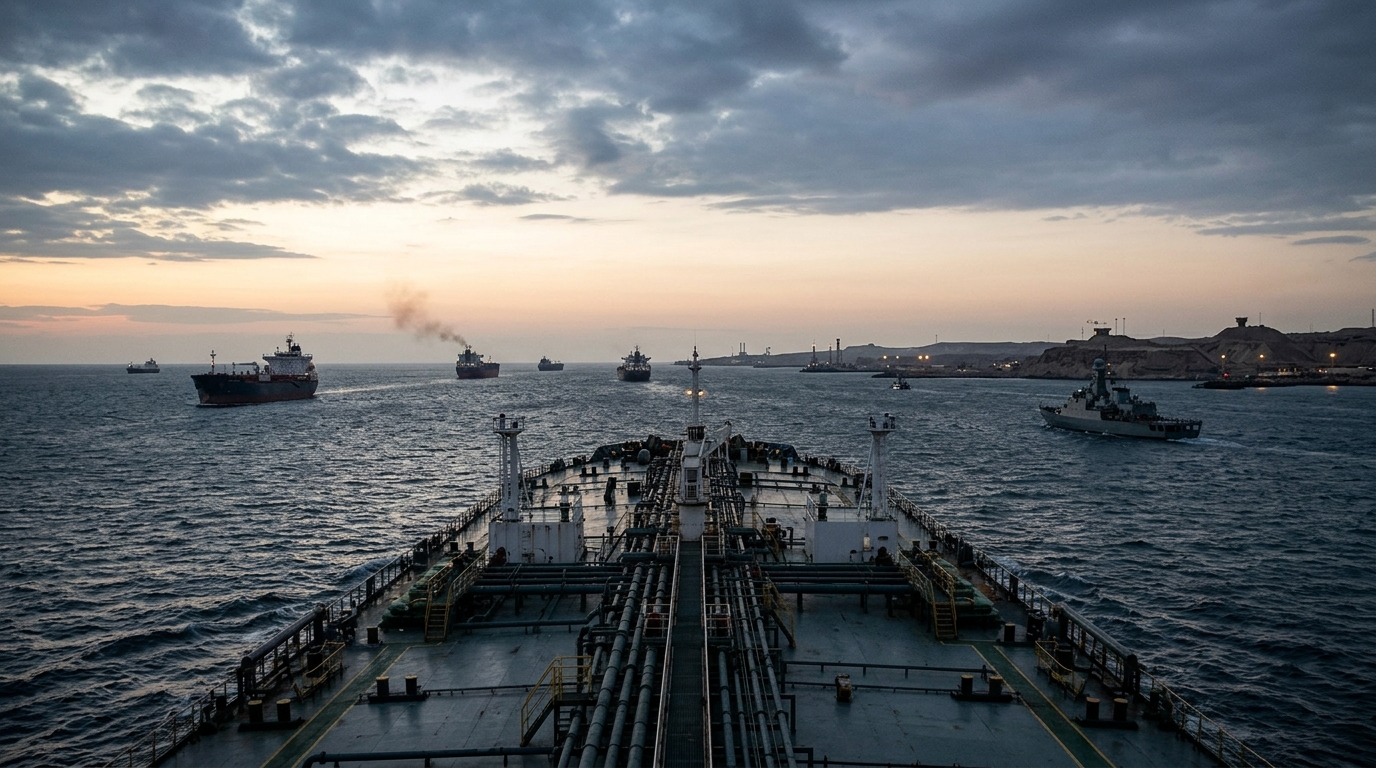
Brent crude settled at $91.40 on Tuesday after the United Kingdom Maritime Trade Operations centre reported new attacks on vessels near the Strait of Hormuz. By Wednesday morning it had already slipped back, falling to around $90.97 a barrel, as the market weighed two forces pulling in opposite directions: escalating physical risk in the Gulf and rising evidence of a supply glut. Neither force is winning cleanly, which is exactly the kind of indecision that makes the upcoming OPEC+ meeting the real trade event of the week.
The Surplus Call
The IEA’s November report, released November 13, is the dominant macro weight on prices right now. The agency said the world oil market would return to a surplus in the fourth quarter, with supply averaging 105 million barrels per day, roughly 1.7 million bpd above forecast demand. That was a significant flip from its previous view: the IEA had previously projected a fourth-quarter supply deficit. JPMorgan has also flagged excess supply, projecting a global surplus of 1.4 million bpd in October. As NLI Research Institute senior economist Tsuyoshi Ueno put it, “since the release of an IEA report this month, perceptions of a global supply glut have kept prices in check.”
The paradox is that the physical situation around Hormuz tells a different story. As of November 24, AIS-visible ship traffic through the strait was running far below pre-war levels, with oil flows still impaired and attacks on tankers picking up again. The surplus is being built on rerouted and recovered supply, not on a Hormuz reopening.
Sunday’s Real Risk
OPEC+ is due to meet on November 29, and the focus is on 2027 production quotas. The decision rests on an independent capacity audit, and that audit has already hit a wall. Iraq has rejected an assessment of its production capacity commissioned by OPEC+, setting up a potential clash at Sunday’s meeting. Baghdad is pushing for recognition of around 6 million bpd in capacity; its current OPEC+ production limit is 4.431 million bpd. An Iraq emboldened to pump more could further weigh on prices in a year already expected to be defined by oversupply.
Analyst Jorge Leon has noted the group faces a difficult decision amid uncertainty over the war, recovery through the Strait of Hormuz, and the potential supply surplus if disrupted barrels return. Two scenarios from here: OPEC+ holds the line on quotas and signals restraint heading into 2027, which probably lifts Brent toward $95. Or Iraq’s pushback destabilizes the framework and the meeting produces higher baseline allocations, putting the $88 level back in focus.
The Tanker Angle
For traders who want Hormuz exposure without taking a pure directional view on crude, tanker equities offer a different expression. Frontline (FRO) reported Q3 2026 results on November 20, with management describing “uncharted territory” for the tanker market; the company posted profit of $641.4 million, or $2.88 per share. The logic is straightforward: more attacks mean fewer vessels willing to transit, which tightens available capacity and supports freight rates even if the crude price itself is capped by surplus fears.
The Trade Setup
XLE is roughly 14.5% below its 52-week closing high set on October 30, tracking the crude slide. That discount is not compelling enough to buy ahead of Sunday if the OPEC+ outcome is ambiguous. The higher-conviction angle is in the tanker names: FRO and International Seaways (INSW) both benefit whether Hormuz stays restricted or escalates further, and their earnings leverage to spot rates has been demonstrated this year. Watch Sunday’s headline first. Any signal that OPEC+ is raising 2027 baselines significantly is a reason to trim both Brent exposure and XLE. A quiet outcome, with Saudi Arabia enforcing discipline on Iraq, reopens the case for Brent back above $92.