
AbbVie reported third-quarter results this morning. The stock is up roughly 27% year to date and near all-time highs. The business case has quietly become more compelling than the chart alone suggests.
Why This Stock Now
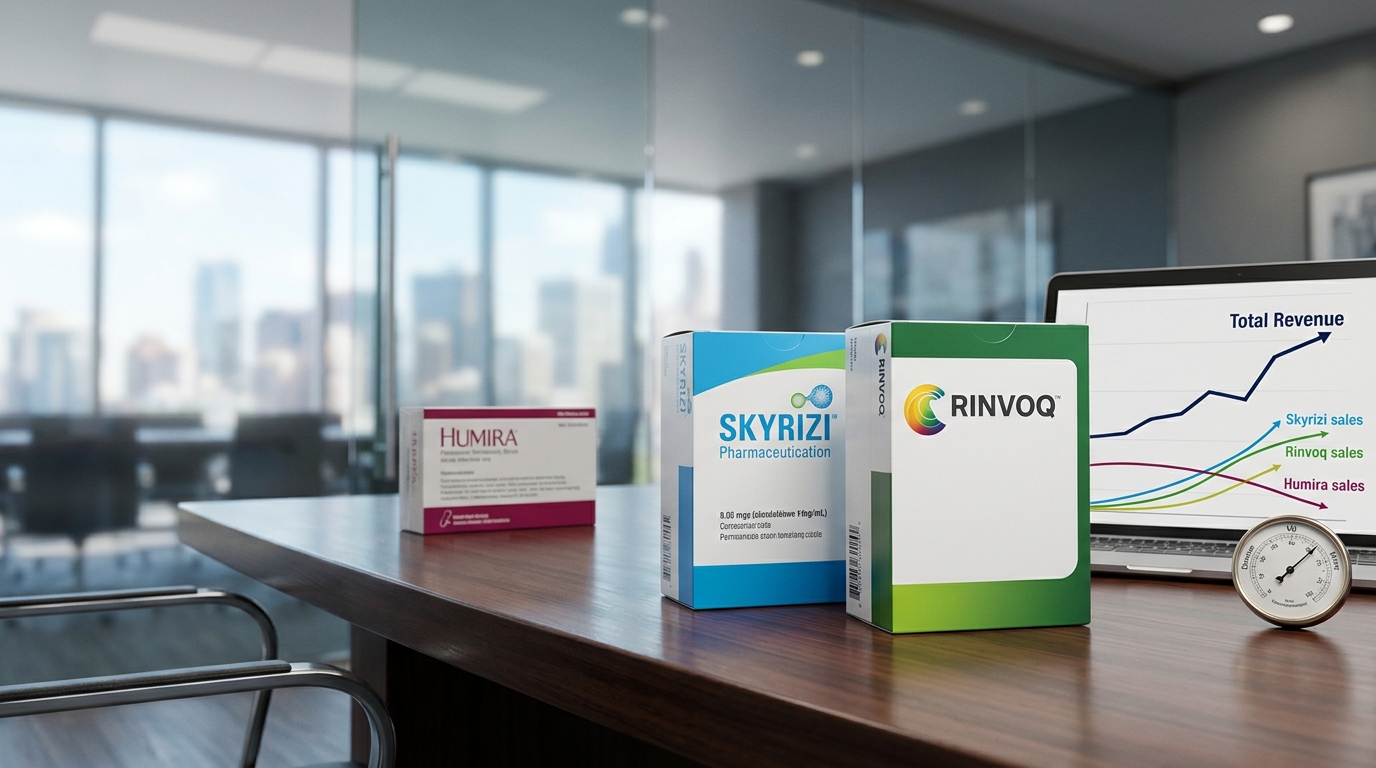
The Humira story is over. The biosimilar erosion that investors spent years modeling happened, and AbbVie grew through it. Humira net revenues were $688 million in Q1 2026. Over that same quarter, Skyrizi net revenues were $4.483 billion and Rinvoq net revenues were $2.119 billion. Skyrizi and Rinvoq together produced more than ten times as much revenue as Humira in Q1 2026. The post-Humira transition is not a future event. It already happened, and AbbVie’s growth rate has accelerated since.
The Business
Skyrizi and Rinvoq make up 47.2% of the roughly $67.6 billion of revenue AbbVie expects in 2026. Management guides Skyrizi to $21.7 billion and Rinvoq to about $10.2 billion. Both drugs are growing above 20% annually. International Rinvoq revenue increased 31.9%, compared with 21.6% growth in the United States, which broadens the revenue base beyond a single reimbursement market. The neuroscience franchise, including Botox Therapeutic and the migraine treatments Ubrelvy and Qulipta, adds a second compounding engine.
Why Wall Street Is Paying Attention
This quarter carries a structural change most investors have underweighted. For the first time, AbbVie should show a cleaner look at earnings power after the one-time charges and transaction noise tied to business development that made prior quarters harder to compare.
Analysts expected Q3 adjusted EPS of approximately $3.73 on revenue of $17.32 billion. The company has beaten consensus estimates in each of the past four quarters. The complication is the market’s reaction: despite beating estimates the last two quarters, AbbVie shares fell 4.45% and 2.51% on those earnings days. Options pricing implied a roughly 5% move on the release. Guidance, not the beat itself, is what moves this stock.
What Could Go Wrong
JAK inhibitor competition is real, and Rinvoq faces pressure from both biosimilar entrants and newer targeted therapies. AbbVie lowered its full-year 2026 adjusted diluted EPS guidance by $0.04 at the midpoint due to the impact of the Apogee Therapeutics acquisition, and integration costs could continue. Eight downward estimate revisions in the 30 days before today’s report lowered the bar, which may help the stock’s reaction. But at roughly 20 times forward earnings, AbbVie has no margin for a guidance cut.
The Bottom Line
AbbVie has already cleared the hardest part of its transformation. Two drugs are growing fast enough that total revenue barely shows the scar left by Humira’s collapse. Today’s report is about whether full-year guidance gets raised again. A market rotating out of technology and toward healthcare and defensives makes AbbVie one of the more compelling combinations of growth and stability available right now. The guidance line on this morning’s release will confirm whether that case still holds.