For years, Hermès has been the luxury sector’s immovable object. While LVMH absorbed Chinese headwinds, Kering stumbled through a Gucci restructuring, and Richemont navigated a watch slowdown, Hermès kept outgrowing them all. Investors granted it a premium multiple precisely because it seemed exempt from the cycle. Thursday’s numbers put a crack in that exemption.
Quarterly sales rose 4.3% year-on-year in currency-adjusted terms to €4.10 billion, slightly below an expected growth rate of 5.2% from analysts polled by Visible Alpha. That gap might sound modest. It is not, given what the market has priced in. Hermès shares slid about 5% in early trade after the revenue fell short of analyst forecasts, Reuters reported. Jefferies analysts said in a note the results “will likely make for a very painful day today.”
The headline miss matters less than where the weakness showed up. Ready-to-wear and accessories fell 2.0% in the third quarter at constant exchange rates, the first time that division has contracted in years. Finance chief Eric du Halgouet said the contraction was chiefly due to weak Chinese demand, while the division kept growing in all other regions. Leather goods told a different story: leather goods sales rose 10.8% in Q3, the category that matters most for the brand’s identity and margins.
China’s weight on the result deserves precision. Hermès said Asia excluding Japan rose 2% at constant exchange rates in the third quarter, and the company described the Chinese market as “very difficult.” Du Halgouet told journalists he remained confident on long-term prospects and would keep investing in the country. He noted: “We are confident about the long term in China; we have a very high-quality network with only 31 stores, so we are continuing to invest.”
This is precisely the moment to ask the question the market is asking loudly and getting wrong: does one soft quarter in Greater China change the investment case for a business whose scarcity is the product?
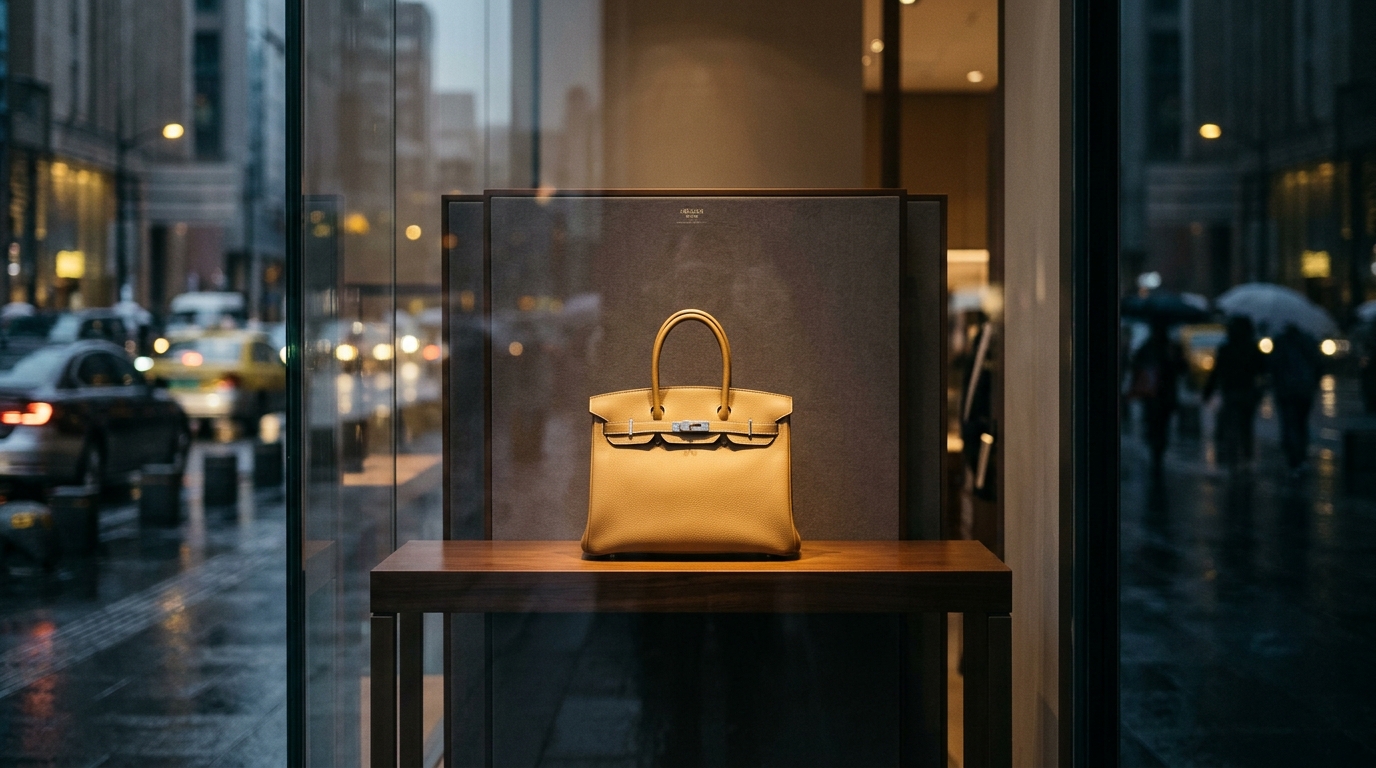
The Hermès model is not luxury marketing. It is deliberate supply restriction. Birkin and Kelly waitlists are not a customer experience quirk, they are the mechanism by which the brand sustains desire and resists the discounting reflex that has hollowed out peers. That mechanism does not break because Chinese consumer confidence drops for a quarter or two. What breaks it is an excess of supply, or a loss of cultural relevance. Neither is in evidence here.
The miss follows LVMH’s downbeat quarterly sales update earlier this month and looked likely to further unsettle investors about the sector’s resilience in the face of a wider luxury slowdown, Reuters reported. That framing conflates two different businesses. LVMH’s portfolio spans mass-adjacent spirits and mid-market fashion. Hermès operates at a price point where customers are less income-sensitive and more wealth-sensitive, and global wealth concentration has not reversed.
Hermès reported strong growth elsewhere earlier in 2026, with double-digit gains in the Americas, Japan, and Europe excluding France in its first-quarter update, a reminder of how different the regional picture can look quarter to quarter. A business growing strongly in multiple major regions while its largest single market stalls is not a broken compounder. It is a business with a concentration problem that geographic diversification is already partially offsetting.
UBS downgraded the stock earlier this month, citing erosion of scarcity and more cyclical demand. That is the thesis to watch. If Hermès has quietly expanded supply faster than its waiting-list mystique can absorb, the premium multiple rests on weaker ground than the brand suggests. That is a legitimate long-term risk, not today’s China data.
In the medium term, Hermès confirmed “an ambitious goal for revenue growth at constant exchange rates” despite global economic, geopolitical, and monetary uncertainties. For investors with a five-year horizon, the question is not whether this quarter missed by 90 basis points. It is whether the scarcity model remains intact. Today’s evidence says it does, imperfectly, but intact.