The utility sector has spent two years fielding a hard question: who pays when a hyperscaler needs more power? At Georgia Power, the answer is now in writing.
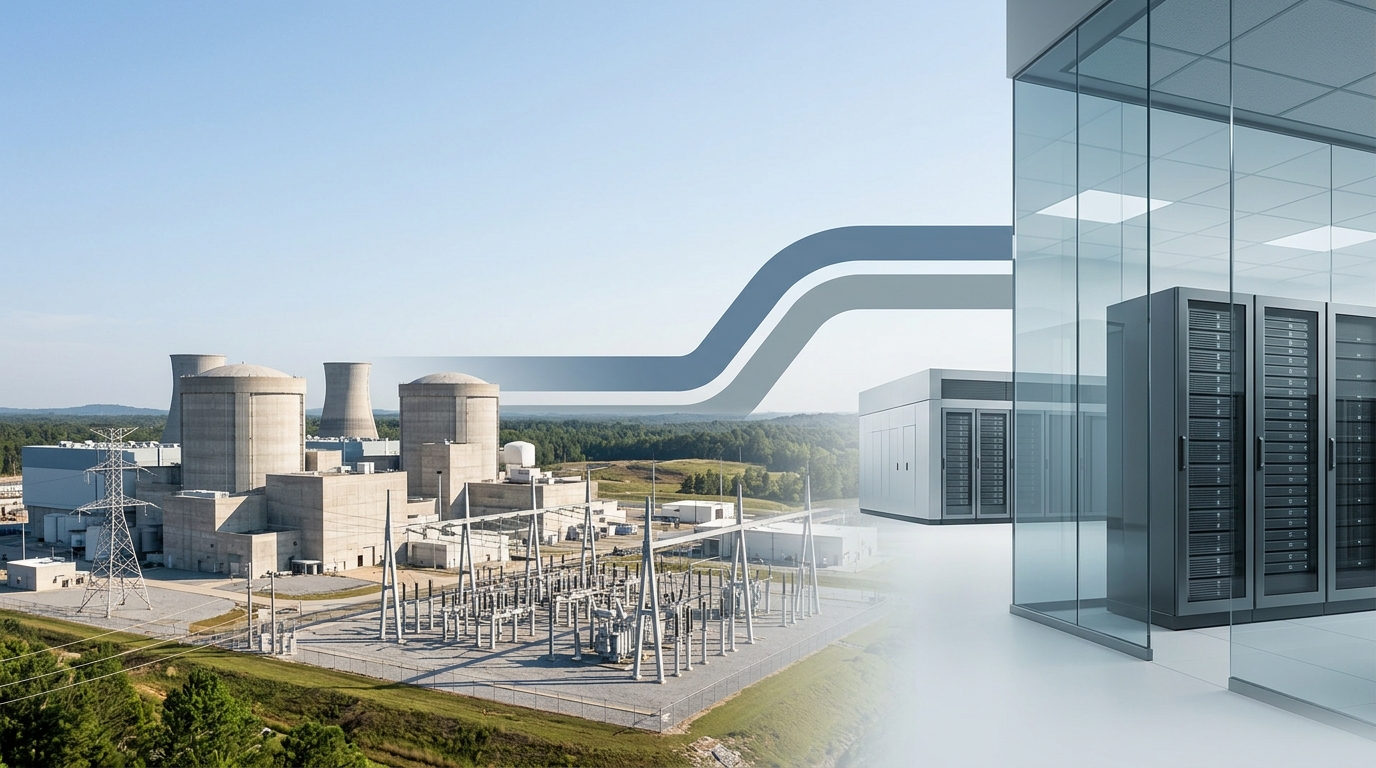
Georgia Power and Google announced a new agreement under which Google will support uprates on Georgia Power’s owned portion of the nuclear units at Plants Vogtle and Hatch, with the facilities set to add approximately 96 MW of new capacity to the electric grid. The agreement is still subject to approval by the Georgia Public Service Commission, and the filings include a new Nuclear Uprate (NU-1) tariff structure as well as a request to approve a new extended power uprate for Plant Hatch 1 and 2. For income-focused investors holding Southern Company (SO), the parent that owns Georgia Power and whose Southern Nuclear unit operates both sites, the structure deserves a close look.
The Bigger Trend
Data centres are consuming electricity at a pace the grid was not built to absorb. AI workloads run around the clock, which means intermittent sources cannot satisfy them on their own. Nuclear fits because it runs at near-full capacity continuously, producing no carbon in the process. The result is a wave of deals linking the biggest technology companies directly to reactor capacity. Reuters reported in April 2026 that Constellation Energy is pursuing 1 gigawatt of nuclear uprates over the next decade, including 135 MW at the Braidwood and Byron Clean Energy Centers in Illinois. What makes the Georgia Power agreement different is the mechanism: instead of a power purchase agreement between two parties, Georgia Power created a tariff. That keeps the utility in control of the asset while transferring the financial obligation for the upgrade to Google.
The Investment Case for SO
The deal comes amid growing scrutiny over who should pay for additional power infrastructure needed to accommodate soaring energy demand. The agreement with Google will help shield residential and other industrial customers from the cost of the upgrades, Georgia Power said. That protection matters to regulators, and regulators matter enormously to utility investors. A PSC that sees ratepayers protected is far more likely to approve future rate requests quickly. Georgia Power says Google’s subscription is projected to enable about $900 million in benefits for customers over the life of the units. That is a compelling figure to present to commissioners weighing the public interest.
As part of this transaction, Google will subscribe to the new NU-1 tariff and receive the Zero-Emission Credits, which represent the carbon-free attributes of nuclear energy, associated with the power generated by the nuclear unit uprates. Google gets what it needs: verified clean energy attributes for its sustainability commitments. Southern Company gets capacity growth funded by a creditworthy counterparty. The 96 MW addition is modest relative to Vogtle’s full output, but the precedent is not modest at all.
For income investors, Southern Company already pays a reliable quarterly dividend. The company’s annualized dividend rate is $3.04 per share. What the Google agreement adds to that baseline is a credible path for load growth at an existing regulated asset, where revenue is backstopped by regulation rather than commodity prices.
Risks to Monitor
Vogtle and Hatch already appear in Georgia Power’s 2025 Integrated Resource Plan as proposed nuclear unit upgrades, but the Nuclear Regulatory Commission still has to grant the license amendment that any extended power uprate requires. Regulatory timelines can slip, and so can engineering schedules. Uprates at operating reactors have slipped before, and a headline number that depends on open approvals is a plan, not capacity. Investors should watch Georgia PSC proceedings tied to the NU-1 tariff filing and the 2025 IRP docket, and they should track the NRC licensing calendar for Hatch.
The broader risk is that the hyperscaler-to-utility relationship remains newer than it looks. Google’s nuclear dealmaking has accelerated: the Georgia agreement follows a 22-year power purchase agreement signed with Fortum for output from the Loviisa nuclear power plant in Finland, tied to Loviisa’s lifetime extension and power upgrade through 2050. That volume of commitment suggests Google is serious. It does not guarantee any single project closes on schedule.
Daily Wealth Takeaway
Regulated utilities have rarely been associated with growth. Southern Company is quietly challenging that view: not by building new reactors, but by using existing ones as the foundation for a new category of revenue paid by some of the world’s most creditworthy technology companies. The lasting lesson here is that the most durable wealth-building opportunities often arrive wearing familiar labels. SO still looks like a utility. The load growth behind it is anything but ordinary.