
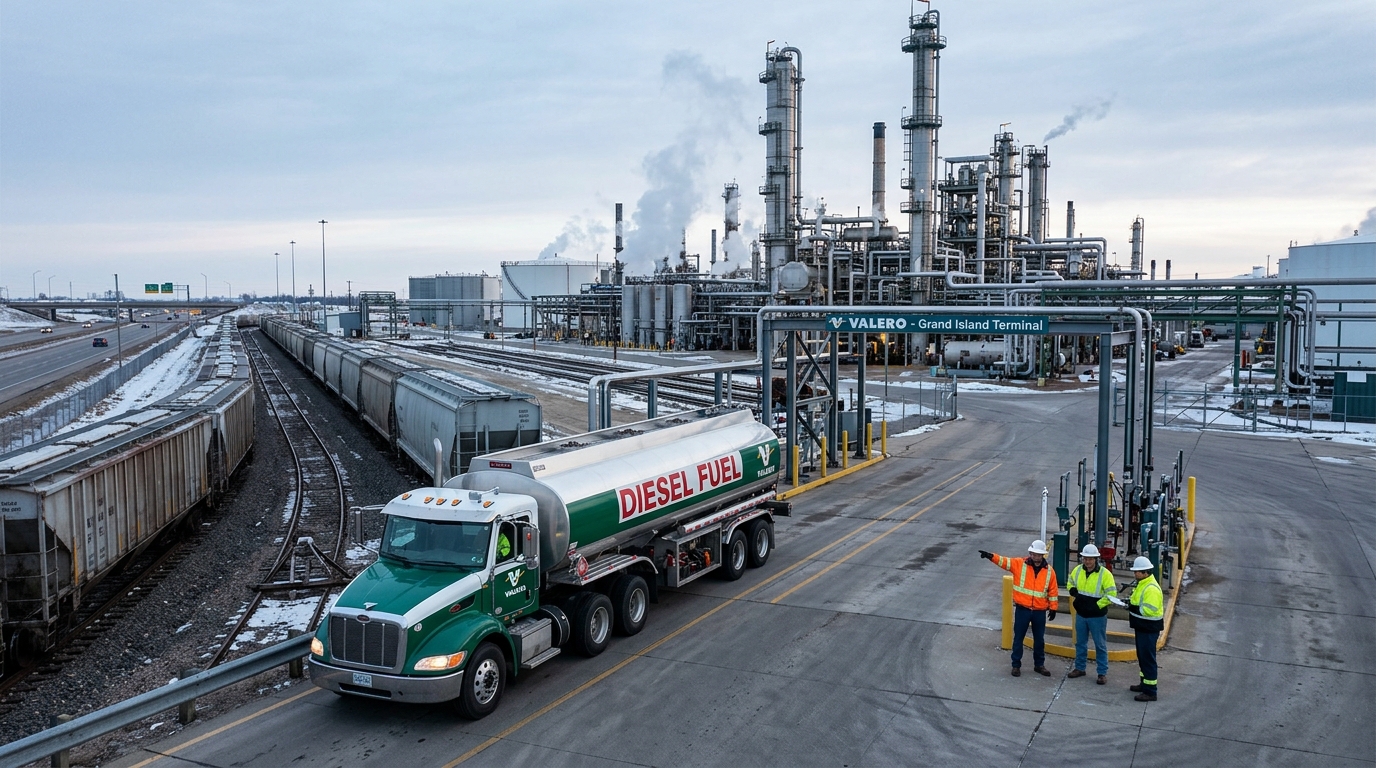
Diesel averaged $6.32 a gallon nationally on Monday, according to AAA. That level sits far above pre-war levels since the Iran war began. On Monday evening, President Trump signed an executive order at a campaign rally in Grand Island, Nebraska, that was supposed to change the math. It has not changed much yet, and investors in refining and trucking stocks need to understand why.
What the Order Actually Does
Red-dyed diesel is chemically identical to standard highway diesel but marked with a red dye to indicate it is off-road fuel, not subject to the federal excise tax. Using it in highway vehicles has been illegal, carrying penalties for tax evasion. The order directs Treasury to temporarily allow highway use of dyed diesel and to defer collection of the federal diesel excise tax on that fuel through December 31, 2026, with no interest or penalties during the deferral period. It also asks officials to explore paths, including legislation, that could eliminate the deferred tax bill.
Unless the administration and Congress find a way to cancel it, the deferred diesel tax would still be owed once the relief period ends on December 31. That clause is the one Wall Street should be reading most carefully. A deferral is not a discount.
Why Wall Street Moved, Then Shrugged
Shares of Valero Energy, Marathon Petroleum, and Phillips 66 edged higher after the executive order was signed. The pop was polite, not conviction. By Tuesday’s close, VLO, MPC, and PSX were essentially flat on the day, which tells you something about how seriously traders are pricing this policy.
Analysts and industry groups have made the same basic point: the order does not create new barrels of diesel, and any retail impact depends on how quickly Treasury issues workable guidance and how much dyed diesel can actually be accessed through existing distribution. In other words, it is not a supply fix.
Following Trump’s directive, fuel retailer trade groups warned gas stations to proceed with caution, noting that Treasury guidance had not yet been issued. They also stressed that deferral is not forgiveness. Dyed diesel is also sold through channels designed primarily for off-road and industrial operators, which constrains access, and any sudden broadening of eligible highway demand could tighten local supply and push prices up rather than down.
The Real Trade: Refiners Were Already Running Hot
The executive order is mostly a distraction from the actual investment thesis in this sector. The Iran war has kept distillate markets tight, and refining margins have been exceptionally high. Valero, Marathon Petroleum, and Phillips 66 have all notched new highs in recent weeks.
Valero reported second-quarter 2026 net income attributable to stockholders of $3.7 billion, or $12.62 per share, up from $714 million, or $2.28 per share, a year earlier.
That profit surge is exactly why the dyed diesel order is not the main event. The main event is the margin environment.
What Could Go Wrong
Years of refinery closures and conversions have left the system less flexible, which helps support margins in tight markets. But Russian and Middle Eastern supply returning, or demand destruction from sustained high prices, could still collapse today’s spike. That is the core risk. The dyed diesel order adds a secondary one: if Treasury guidance broadens access faster than supply can respond, pump prices could rise, creating political pressure on refiners who are already navigating periodic export-ban talk.
EIA has forecast U.S. distillate inventories falling below 100 million barrels and staying unusually tight for an extended period, which keeps the underlying margin case intact heading into Q4 earnings. Still, the trade remains hostage to geopolitics and policy risk.
The Bottom Line
The dyed diesel order is not the catalyst that makes Valero, Marathon Petroleum, or Phillips 66 a buy today. The existing supply shock already did that. What the executive order reveals is how heated the political environment around diesel has become, and that pressure is unlikely to produce policies that structurally hurt refiners before year-end. The tax deferral ends January 1, 2027. The war-driven margin environment does not have a clear expiration date. Valero, with strong operations and free cash flow in this cycle, remains one of the more defensible positions in this trade. Buy it for the crack spread, not the political theater.