Hey there, bargain hunter.
There’s a version of this story where Constellation Energy is the most important infrastructure company in America right now.
There’s another version where it’s a utility that overpaid for an acquisition and faces years of capital-heavy earnings pressure.
Both versions are currently trading at around $251 a share.
Here’s the context
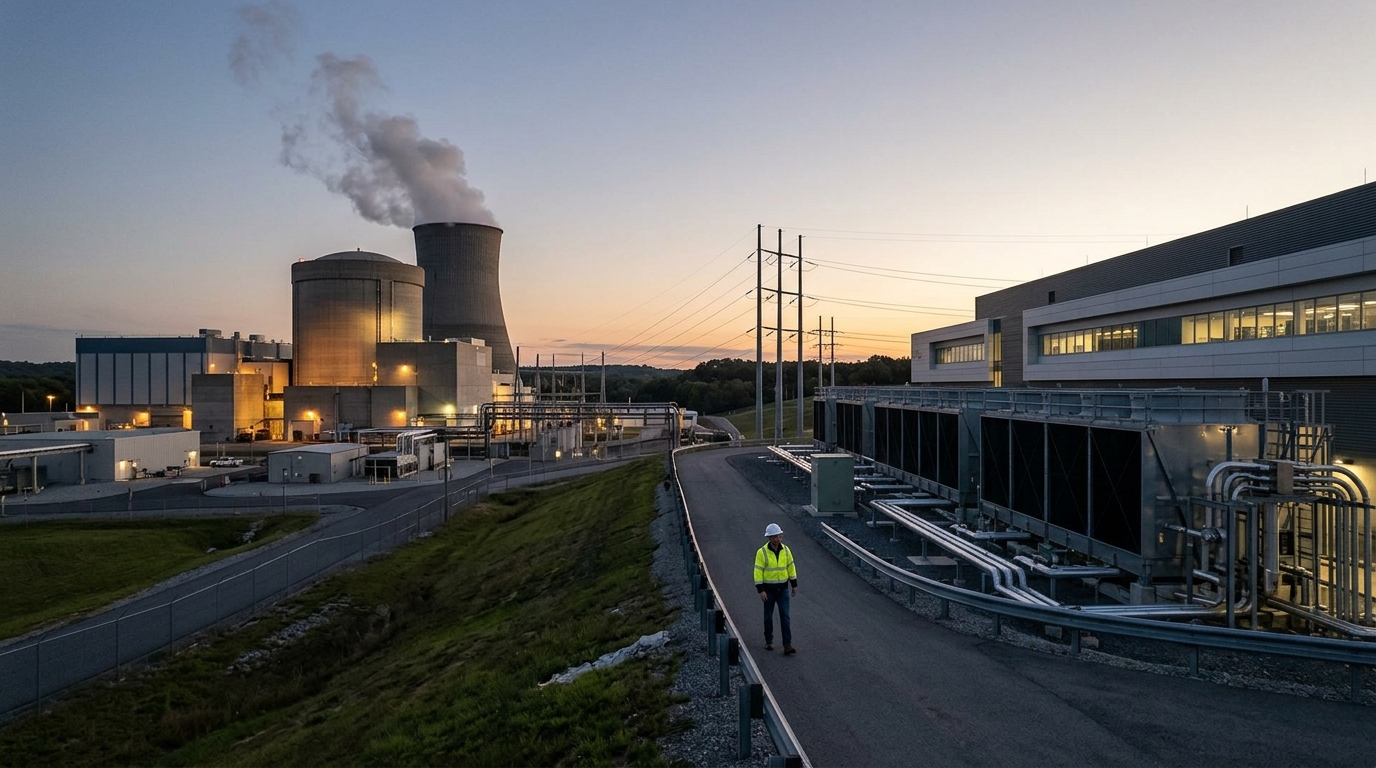
Constellation Energy runs the largest commercial nuclear fleet in the United States — 21 reactors. For a long time that was a liability. Nuclear is expensive to maintain, slow to build, and politically complicated. Then AI showed up and changed the equation entirely.
Data centers don’t sleep. They need power 24 hours a day, 7 days a week, 365 days a year. Solar and wind can’t guarantee that. Natural gas can, but it emits carbon and hyperscalers have public decarbonization commitments. Nuclear is one of the only carbon-free sources that can deliver around-the-clock power at scale today.
So Microsoft and Meta started signing 20-year agreements tied to existing nuclear plants. CEG has been one of the biggest beneficiaries of that shift.
Then came Calpine
In January 2026, Constellation completed its $26.6 billion acquisition of Calpine Corporation. The combination materially expanded Constellation’s generating portfolio and helped create what the company describes as the nation’s largest producer of electricity.
The stock had other ideas. The 52-week high was $412.70. It’s currently trading near $251. That’s about a 39% discount to the top.
Some of that is the market digesting acquisition risk. Some of it is the free cash flow yield going negative as capex ramps hard. And some of it is just a crowded energy trade getting unwound.
What the numbers actually show
The upcoming Q2 earnings call is currently scheduled for August 6, 2026.
The forward P/E sits near 20 times.
Constellation is also planning nuclear uprates that could total up to about 1 gigawatt over time.
The demand math is staggering
Four AI hyperscalers are collectively guiding to roughly $725 billion in combined 2026 capital expenditures. The EIA’s Annual Energy Outlook models data center server electricity use reaching as high as 818 billion kilowatt-hours by 2050 in a high-demand case — more than 16 times the 2020 level.
What I’m thinking about
The Calpine acquisition is either genius or a distraction. Adding a large natural gas portfolio, right when the whole investment case is built around nuclear’s clean-energy premium, is a tension worth sitting with. Gas contracts don’t command the same pricing power as nuclear clean-energy agreements. If hyperscalers ever walk back their carbon commitments — unlikely but not impossible — that calculus shifts.
The capital spending cycle is also real. Free cash flow going negative in the near term is a feature of a company building for a decade-long contract book. But it does mean the near-term setup for the stock is more dependent on investor patience than on quarterly earnings beats.
Here’s what’s interesting: the long-duration contracted revenue story is arguably stronger today than it was when the stock was at $412. The business got bigger, the backlog got longer, and the stock got ~40% cheaper. That combination is exactly the kind of thing a bargain hunter should at least be tracking closely heading into Q2.
The next catalyst is earnings. After that, it’s whether any new hyperscaler deals get announced in the back half of the year. Those tend to move this stock meaningfully.