Analyst Targets (as of June 2026)
- JPMorgan — Overweight, $1,050 target
- Consensus (25 analysts, S&P Global) — Hold, $947.60 average target
- Street range: $730 low / $1,050 high
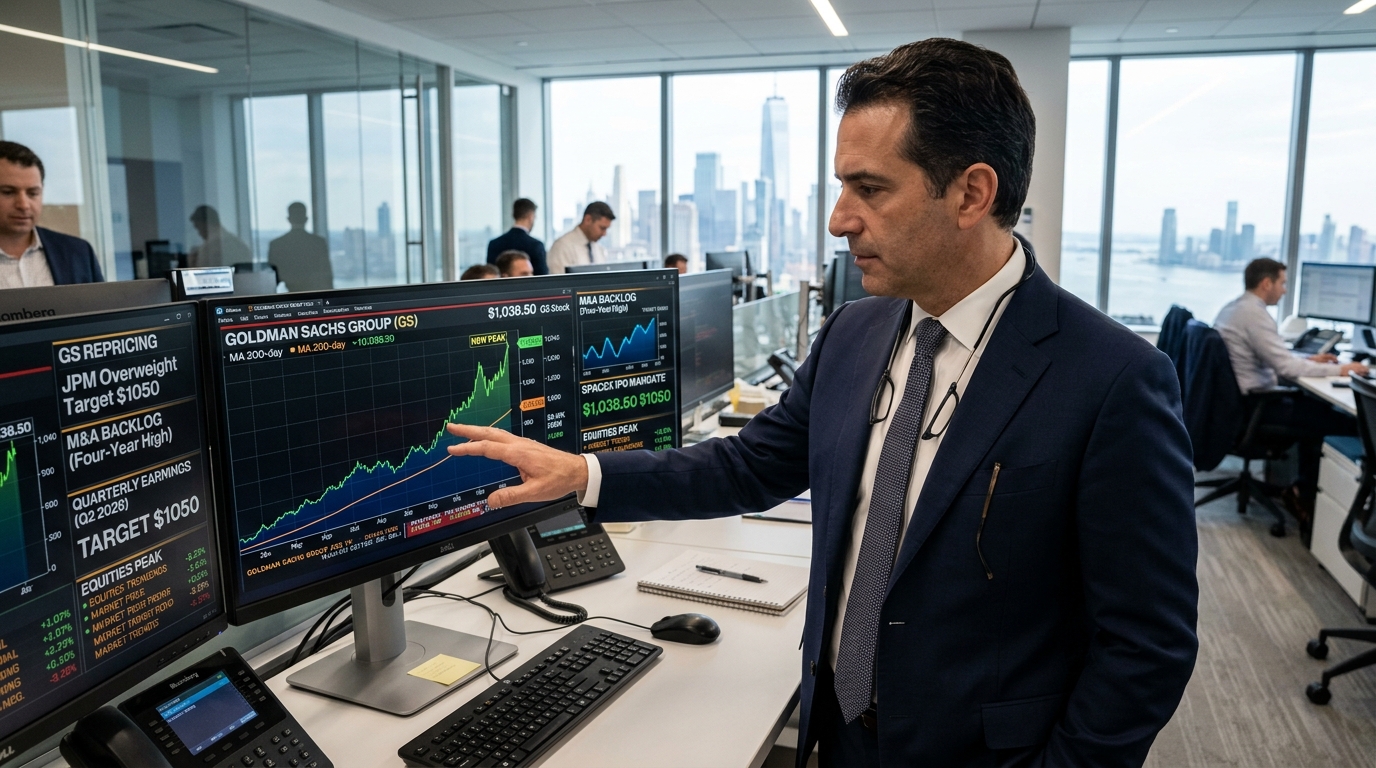
Goldman Sachs hit $1,040 per share earlier this week — trading near the top of its 52-week range and well above its 200-day moving average. That’s a stock up roughly 37.5% over the past twelve months. The fundamentals, on paper, justify the move. But here’s the thing: the stock fell ~2% the same day Q1 2026 earnings dropped, even after beating on nearly every line. That tells you something.
What the market is actually wrestling with isn’t whether Goldman is a great business right now. It clearly is. The real tension is whether Q1 marks the beginning of a durable earnings step-up — or a high-water mark that gets harder to replicate as conditions normalize.
The Numbers
Q1 2026 results (reported April 14):
- Revenue: $17.23B vs. $16.97B expected (+14% YoY)
- EPS: $17.55 vs. $16.49 estimate
- Profit: $5.63B, up 19% year-over-year
- Equities trading: $5.33B — highest Q1 in Goldman history, beating estimates by $420M
- Investment banking fees: $2.84B (+48% YoY), beating by $340M
- FICC: $4.01B — missed estimates by $910M (-18.5%)
- Assets under supervision: record $3.7 trillion (33rd consecutive quarter of net inflows)
The FICC miss is what rattled the tape. A $910 million shortfall in fixed income is hard to ignore, and it signals the trading revenue normalization that bears have been warning about for months.
Why GS Is Moving
Three things are keeping the bull case alive. First, M&A. Goldman’s president John Waldron said deal volumes are on pace to approach — or exceed — the 2021 record, with corporate-led transactions showing substantial growth. The M&A backlog is at a four-year high. Advisory revenue in Q1 alone surged 89% year-over-year to $1.5 billion. Second, the IPO pipeline is extraordinary. Goldman holds the lead-left position on the SpaceX IPO, is co-leading Anthropic’s public offering, and CEO David Solomon described a market characterized by “more greed than fear” around AI-focused companies. Third, alternatives and wealth management continue compounding quietly — $62 billion in long-term fee inflows in a single quarter isn’t noise.
The FOMC dynamic matters here too. Economists at Goldman and peers are projecting a 25 basis point rate cut at the June meeting, which would support IPO pricing and debt capital markets activity through the back half of 2026.
Bull / Base / Bear
Bull: Advisory fees sustain above $1B per quarter as the M&A backlog converts, equities financing holds above $2B, and the SpaceX and Anthropic IPOs deliver blockbuster fees in Q3. GS re-rates toward 18-20x forward earnings.
Base: Deal activity remains robust but FICC stays under pressure, NTM P/E holds near 16x — already above the five-year average of 12x — and the stock grinds sideways near current levels as earnings growth catches up to price.
Bear: Prolonged Middle East conflict drives energy inflation, delays Fed cuts into 2027, IPO pipeline stalls as rate sensitivity bites, and equities financing mean-reverts. A 15-20% drawdown from current levels is plausible without a change in macro trajectory.
What to Watch
Q2 2026 earnings is the proving ground. Two data points matter above all: advisory revenues sustaining above $1B, and equities financing holding above $2B per quarter. If both hold, the durability thesis wins. If either cracks, the hold consensus will look prescient.
Goldman Sachs is executing about as well as it ever has. The strategic exit from consumer banking cost $7B+ in losses, but the refocus on M&A advisory, institutional trading, and alternatives has produced the widest M&A market share lead — 32% of global volume — in a decade. The stock already knows this. That’s the problem.
For informational purposes only.