The model dropped on September 3. By Monday morning, with Wall Street closed for Labor Day, the trade had nowhere to go but Asia.
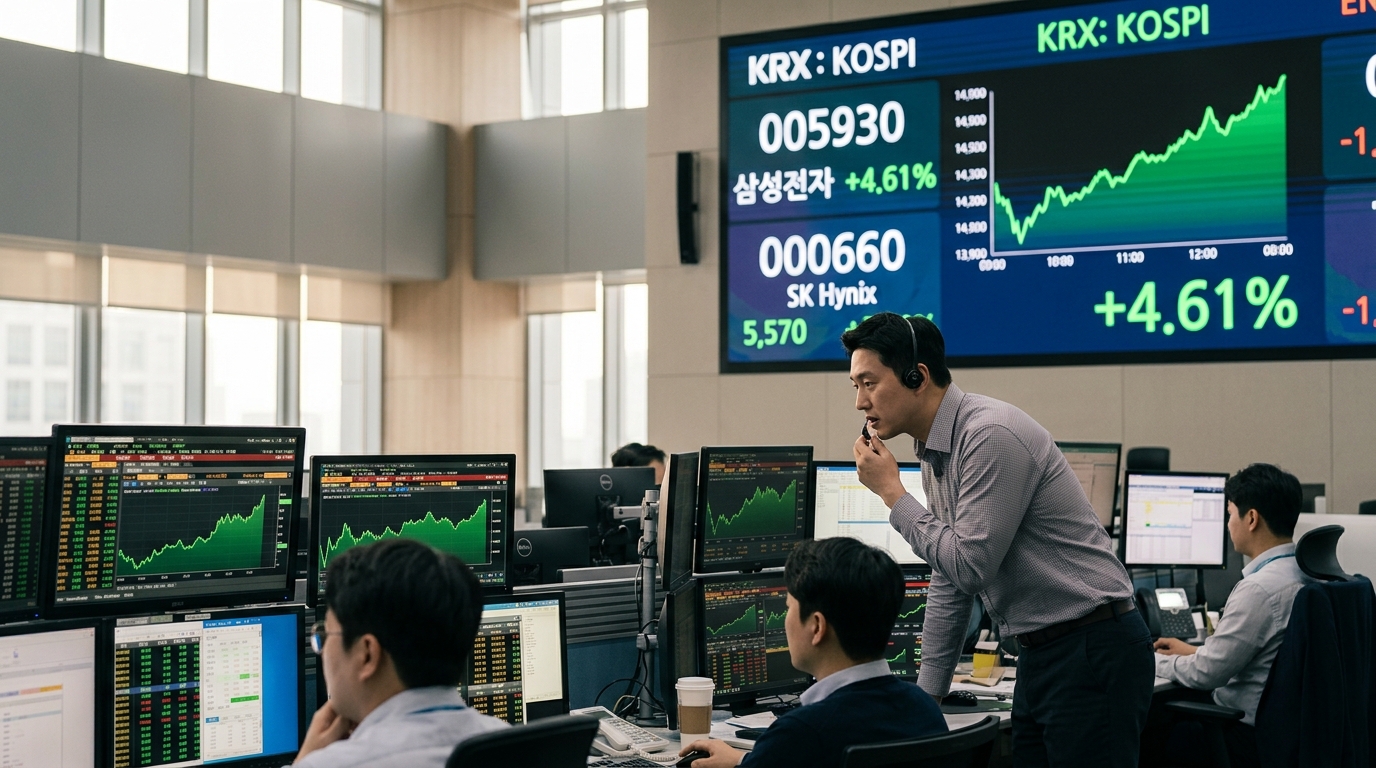
South Korea’s Kospi jumped 4.61% to 6,995.39, just shy of the psychologically critical 7,000 level, while Japan’s Nikkei 225 gained 2.1% to finish at 66,399.84. SK Hynix rose 8.26% to close at 1,783,000 won; Samsung Electronics gained 5.68% to 270,000 won. These were not retail investors chasing momentum. Foreign and institutional investors net purchased 2.59 trillion won ($1.93 billion) and 2.63 trillion won worth of shares, respectively, while retail investors net sold 6.82 trillion won.
What the Buyers Actually Believe
The investment thesis embedded in those flows is specific. GPT-6 Astra is not simply a faster model. API pricing is $10 per million input tokens and $50 per million output, with a 1,050,000-token context window. That is 2.5 times GPT-5.6 Sol’s current promotional rate. Every enterprise workload that migrates to Astra pays 2.5 times more per token and, critically, can sustain queries orders of magnitude longer. Longer context means more tokens in flight per inference pass. More tokens in flight means more KV-cache pressure. More KV-cache pressure means more high-bandwidth memory.
Prompts with more than 272,000 input tokens are priced at 2x input and cache rates and 1.5x output for the whole request. That pricing structure is not a tax on power users; it is a signal that serving million-token context is memory-intensive enough that OpenAI needs to recoup it. Institutions in Seoul read that correctly. A model with this context architecture running at scale is a standing order for high-bandwidth memory, and Samsung and SK Hynix are the two companies most capable of filling it.
OpenAI said GPT-6 Astra was trained on more than 100,000 GPUs at its Stargate site in Texas. The limited initial release will also allow OpenAI to scale its compute capacity because Astra is described as a very large model. Scaling that infrastructure means procuring more accelerators, and every next-generation accelerator ships with high-bandwidth memory. The rollout extends to Amazon Bedrock and Microsoft Azure in the coming days. Both hyperscalers will need to provision capacity to serve it. That is the structural argument for memory demand, and it is the argument institutions were underwriting on Monday.
The Bear Case
The counter-argument deserves weight. The rally looked narrower under the surface: at one midday reading, 441 Kospi stocks were falling and only 421 were rising, with another 49 unchanged. Monday’s gain was a forceful reset in large chip stocks. It was not yet a market-wide vote of confidence.
There is also the question of timing. Foreign and institutional investors had been net sellers of Korean equities through the first days of September before reversing sharply Monday. Foreigners and institutions, which had been selling in recent sessions, turned net buyers together for the first time in a while. When buyers who have been absent for days pile in simultaneously on a US holiday, the flows can reflect positioning as much as conviction. A closed New York amplifies any move in Asian chip names because the natural arbitrage mechanism, US chip stocks, is unavailable.
Goldman Sachs Asia-Pacific equity strategist Timothy Moe maintained a 12,000 Kospi target in comments reported Monday, estimating KOSPI profit growth near 360% in 2026 and 35% in 2027. That target needs two things simultaneously: memory profits must endure, and investors must pay a higher multiple for them. China’s memory capacity and political resistance to US data-center construction could weaken either assumption.
Stocks to Watch
SK Hynix is the clearest direct beneficiary. HBM4 production is where long-context inference economics concentrate, and Hynix’s lead in that product line is well established. An 8.26% move on one session of institutional conviction is meaningful, not conclusive.
Samsung Electronics carries more complexity. Its HBM qualification with Nvidia remains a recurring question. The 5.68% gain Monday reflects optimism that Astra-driven demand is large enough to lift both suppliers, but Samsung needs to close the qualification gap before it captures the highest-margin slice of the order book.
Nvidia, closed Monday but up sharply Friday, is the node through which Astra’s compute demand flows to the memory suppliers. Every Blackwell system that Microsoft and Amazon deploy to serve Astra API calls is a Nvidia order first and a Samsung and Hynix order second.
Micron is the US alternative that Tuesday’s open will price. If institutions were buying a genuine demand cycle rather than a holiday-vacuum trade, Micron should see follow-through. If the Kospi fades when New York opens, that is the cleaner read.
The session told investors what they wanted to believe about GPT-6 Astra. Tuesday’s open will tell them whether they were right.